

Solution
-
 Jul 31/2026
How to Tackle Moderate Water Gushing in Deep Geological Drilling (500–600m Depth)
-
 Jul 30/2026
Geological Drilling & Drilling Fluid Terminology
-
 Jul 30/2026
Distinguishing Hole Contraction and Hole Collapse in Geological Drilling
-
 Jul 28/2026
Comprehensive Guide to Drilling Fluid Key Parameters, Testing Methods & Professional Mud Solutions
-
 Jun 28/2026
4 Key Formation-Specific Drilling Fluid Formulation Strategies for Small-caliber Geological Coring
How to Tackle Moderate Water Gushing in Deep Geological Drilling (500–600m Depth)
What You Will Learn from This Blog:
– Clear on-site parameters: Fully understand the actual working conditions of water gushing at 500–600m deep drilling, including gushing volume, borehole size, casing depth and low drilling fluid density problems.
– Root cause analysis: Learn why low-specific-gravity drilling fluid and shallow casing lead to sustained deep stratum water gushing.
– Field-proven solutions: Master the standard treatment method of weighting mud with barite combined with plugging agent to control water gushing.
– Key construction tips: Grasp the core requirement of continuous one-time grouting to ensure successful water plugging.
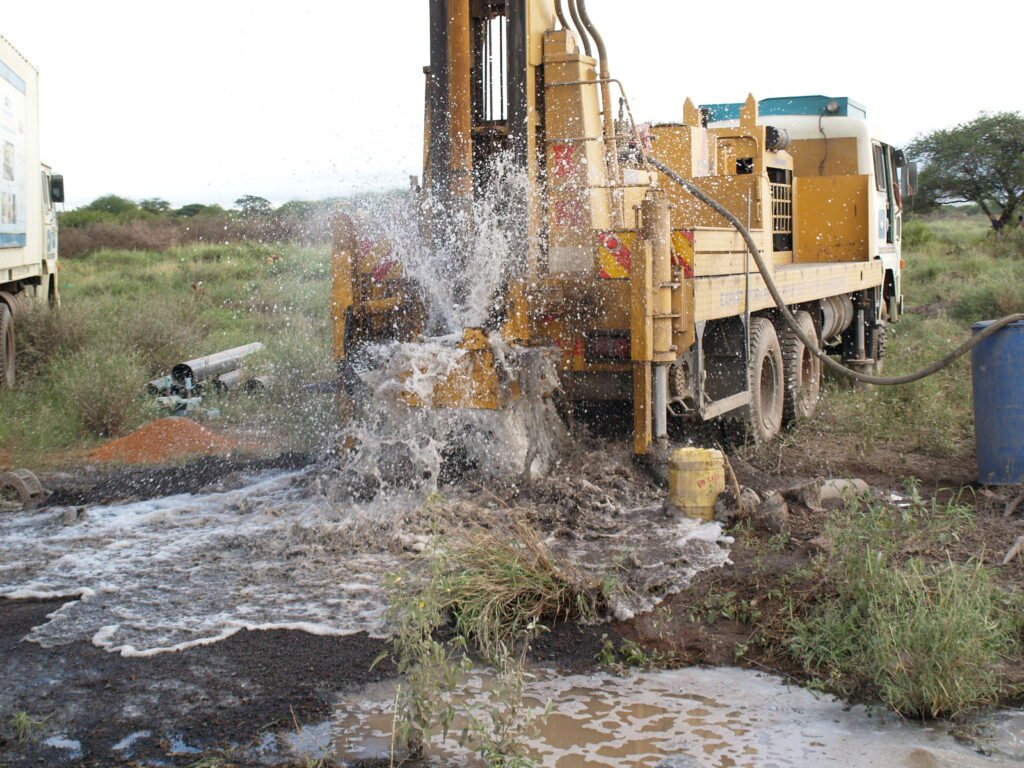
Geological drilling in deep strata frequently encounters groundwater gushing issues, which can disrupt drilling progress, damage borehole stability, and even trigger downhole accidents if not handled properly. Today, we share a practical on-site case of water gushing occurring at 500–600m drilling depth, along with targeted, field-verified solutions for reference in geological exploration and engineering drilling projects.
On-Site Water Gushing Working Conditions
This water gushing incident occurred during conventional geological core drilling, with clear and standardized field monitoring parameters. The detailed working conditions are as follows:
– Water gushing interval: 500–600 meters underground, belonging to deep confined aquifer strata
– Water inflow rate: 2–3 liters per hour, defined as moderate and stable water gushing
– Borehole diameter: 89mm conventional drilling aperture
– Casing depth: The casing is only fixed to 100m depth, failing to cover the deep water-bearing stratum
– Water head height: 50–60cm, indicating continuous groundwater pressure in the stratum
– Mud gravity: 1
The core cause of this problem is the mismatch between casing depth and water-bearing stratum distribution. The shallow casing (100m) cannot isolate the deep confined groundwater at 500–600m. Under persistent formation water pressure, steady water gushing forms in the borehole. Although the single-hour water inflow is not huge, long-term unmanaged gushing will dilute the original drilling mud, reduce mud viscosity and wall-protecting performance, easily causing borehole wall collapse, mud leakage and other secondary hazards.
Targeted On-Site Treatment Solutions
Based on the actual gushing volume, water pressure and stratum characteristics of the wellbore, we adopted two core operational measures to quickly suppress water gushing and restore safe drilling conditions. The solutions are simple, efficient and highly operable for field construction.
2.1 Adjust Mud Performance: Increase Mud Weight with Barite + Add Plugging Agent
The original drilling mud with a specific gravity of 1 cannot balance the confined water pressure of the deep aquifer, which is the fundamental reason for sustained water gushing. We optimized the mud system as follows: raise the mud specific gravity to 1.3–1.4.
On-site operation adopts barite powder weighting, the most common and stable weighting material for geological drilling. Barite can effectively improve the mud density, enhance the hydrostatic pressure of the mud column in the borehole, and form a reliable pressure balance with the stratum confined water, so as to curb groundwater intrusion into the wellbore.
Meanwhile, a professional drilling plugging agent is added to the weighted mud. The plugging agent can quickly fill the tiny fractures and pore channels in the 500–600m water-bearing stratum, form a dense protective filter cake on the borehole wall, block the water seepage channels from the source, and cooperate with the high-specific-gravity mud to achieve dual effects of pressure resistance and water plugging.
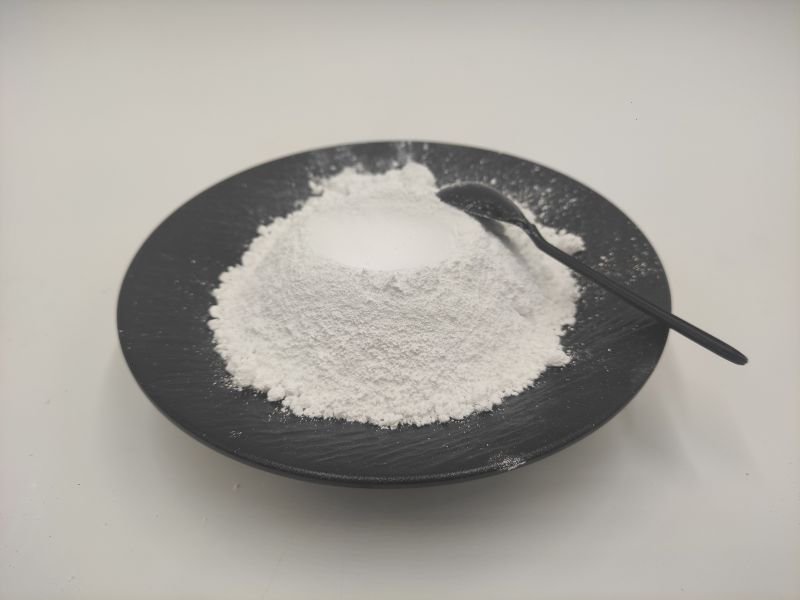 Barite powder
2.2 Continuous Grouting Injection Without Interruption
Construction continuity is the key to successful water plugging for deep moderate water gushing. We formulate a strict construction principle: inject the modified mud into the drill pipe in one continuous operation without any midway stop.
Intermittent grouting will lead to pressure loss in the wellbore, cause stratification and precipitation of weighted mud and plugging agent, destroy the integrity of the plugging slurry, and ultimately result in incomplete plugging and repeated water gushing. Continuous integral injection can ensure the uniform mixing of barite and plugging agent in the mud, maintain stable grouting pressure, make the slurry fully contact and infiltrate the water-bearing fractured stratum, and maximize the plugging and wall-protecting effect.
Construction Notes & Practical Effects
After the implementation of the above measures, the borehole water gushing was completely eliminated within a short time. The high-specific-gravity mud stably balanced the formation water pressure, the borehole wall remained intact without collapse or mud leakage, and the drilling operation returned to normal efficiently.
For similar deep drilling water gushing cases with shallow casing, low water inflow and stable water pressure, this set of solutions has strong universality. The core logic is to rebuild wellbore pressure balance + block water seepage channels + ensure continuous construction, which avoids the high cost and long cycle of casing deepening construction.
Final Summary
Water gushing at 500–600m deep drilling is a common hidden danger in geological exploration. Facing moderate water gushing with 2–3L/h inflow and 50–60cm water head, it is unnecessary to adopt large-scale reinforcement or casing reconstruction. The combination of barite-weighted mud (1.3–1.4 specific gravity) + plugging agent + one-time continuous grouting is the most economical and efficient on-site solution.
Reasonable mud performance adjustment and standardized continuous construction can effectively solve deep low-volume water gushing, ensure borehole stability, and greatly improve the safety and efficiency of deep geological drilling construction.
Contact Us
Company Name: SanheRunjing Technology Co., Ltd.
Core Business: R&D & production of drilling fluid additives, drilling fluid testing technical guidance, drilling construction technical service
Location: Room 305, 3rd Floor, Building 1, Yard 7, Guangyang New Road, Fangshan District, Beijing, China
Check out other recent news:
Geological Drilling & Drilling Fluid Terminology
Distinguishing Hole Contraction and Hole Collapse in Geological Drilling
Comprehensive Guide to Drilling Fluid Key Parameters, Testing Methods & Professional Mud Solutions
4 Key Formation-Specific Drilling Fluid Formulation Strategies for Small-caliber Geological Coring