

Solution
-
 Jul 31/2026
How to Tackle Moderate Water Gushing in Deep Geological Drilling (500–600m Depth)
Jul 31/2026
How to Tackle Moderate Water Gushing in Deep Geological Drilling (500–600m Depth)
-
 Jul 30/2026
Geological Drilling & Drilling Fluid Terminology
Jul 30/2026
Geological Drilling & Drilling Fluid Terminology
-
 Jul 30/2026
Distinguishing Hole Contraction and Hole Collapse in Geological Drilling
Jul 30/2026
Distinguishing Hole Contraction and Hole Collapse in Geological Drilling
-
 Jul 28/2026
Comprehensive Guide to Drilling Fluid Key Parameters, Testing Methods & Professional Mud Solutions
Jul 28/2026
Comprehensive Guide to Drilling Fluid Key Parameters, Testing Methods & Professional Mud Solutions
-
 Jun 28/2026
4 Key Formation-Specific Drilling Fluid Formulation Strategies for Small-caliber Geological Coring
Jun 28/2026
4 Key Formation-Specific Drilling Fluid Formulation Strategies for Small-caliber Geological Coring
Small-caliber Drilling Fluid Contaminants: Daily Mud Treatment Strategies for Geological Core Exploration
Small-caliber Drilling Fluid Contaminants: Daily Mud Treatment Strategies for Geological Core Exploration
From this Blog, you will know:
– Three Major Mud Contaminants That Destroy Slim Drilling Fluid Rheology On-Site
– Portable Field Testing Methods for Real-Time Drilling Fluid Quality Monitoring
– Targeted Treatment Workflows for Solids, Salt and Organic Contamination
– Daily Maintenance Routines to Extend Mud Lifespan and Cut Drilling Waste
Oilfield drilling sites feature three-stage solid control infrastructure: vibrating shale shakers, desanders and centrifuges that continuously strip fine rock solids, formation salts and clay debris from circulating mud. Compact Small-caliber geological drill rigs lack this critical processing hardware, limited to single-layer basic shale shakers with coarse screen mesh incapable of capturing micron-sized silt and clay particles. Over multi-day continuous coring operations, fine formation contaminants accumulate endlessly within closed small-caliber mud circulation systems, gradually destroying balanced mud rheology, weakening wellbore stabilization capacity and accelerating wear on pump seals, drill rods and core barrel components. Contaminated drilling fluid creates a destructive repeating cycle: degraded mud delivers poor cuttings transport, increasing solids loading in the mud system and worsening contamination further, forcing crews to fully drain and re-mix entire mud batches far more frequently than necessary. This guide identifies the three most prevalent small-caliber mud contaminants, introduces portable field testing workflows for real-time fluid quality monitoring, lays out step-by-step dilution and additive treatment sequences, shares waste reduction practices for remote exploration zones and establishes long-term contamination prevention routines for deep slim core drilling campaigns.
As a professional enterprise focusing on drilling fluid material R&D, independent production and on-site customized technical services, SanheRunjing Technology deeply addresses the long-standing contamination pain points of small-caliber slim hole drilling. Different from large-scale oilfield mud solid control systems, small geological drilling equipment has limited solid processing capacity and is extremely vulnerable to various contaminant interference. Relying on independent intellectual property rights of targeted contamination control technology, full-series self-produced treatment additives and mature field daily maintenance schemes, we break the industry dilemma of frequent mud failure, short service life and serious waste caused by unmanaged contamination. We provide one-stop whole-process solutions covering real-time monitoring, targeted governance and daily prevention, helping drilling teams stabilize mud performance, reduce material consumption and cut hidden construction costs.
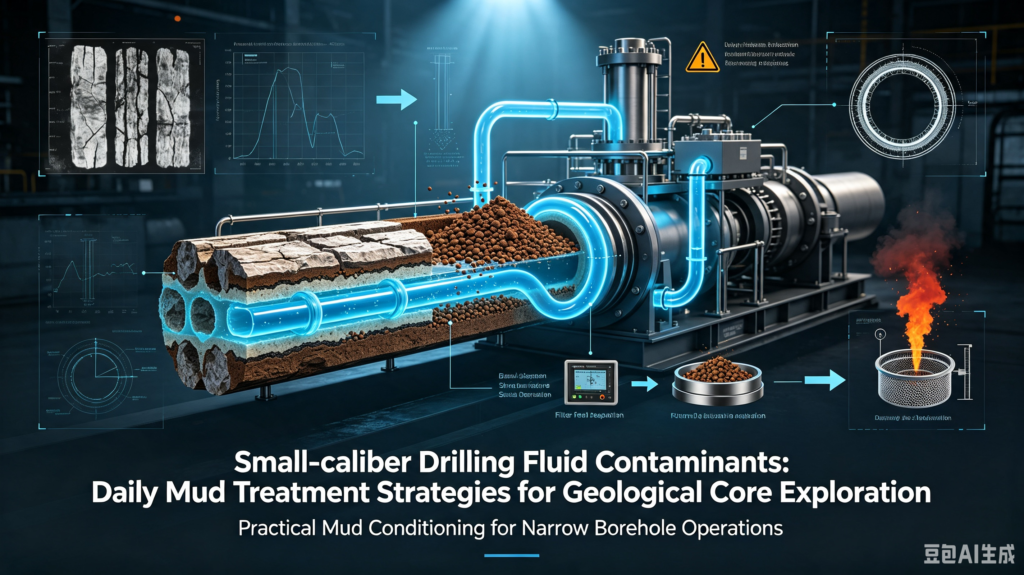
Three Core Contaminants That Disable Slim Hole Drilling Fluid Performance
Three primary contaminant categories degrade small-caliber geological drilling mud performance on every field project. First, fine dispersed solids—silt, pulverized rock dust and swollen shale particles smaller than 74 microns—pass through standard shaker screens and recirculate indefinitely, raising mud density and plastic viscosity over time. Second, dissolved inorganic salts from saline groundwater, clay-rich regolith and evaporite formations disrupt polymer and bentonite hydration, breaking down gel strength and eliminating filtration control capabilities. Third, organic debris including surface vegetation, humic acid from topsoil and decaying plant material destabilizes biopolymer additives, reducing suspension power and accelerating bacterial breakdown of mud blends. Each contaminant type triggers distinct measurable changes in fluid properties identifiable with low-cost portable field testing kits.
SanheRunjing Technical Interpretation: Most on-site mud performance degradation failures are attributed to indiscriminate contamination treatment by construction teams, who adopt unified mud replacement methods for all contaminant problems, resulting in serious material waste and efficiency loss. Based on massive field stratum data accumulation, we classify and characterize three major slim hole mud contaminants: fine solid contamination leads to rheological hardening and poor cutting discharge; salt contamination causes mud hydration failure and lost sealing performance; organic contamination triggers additive inactivation and fluid system deterioration. Targeting the differentiated damage mechanisms of different contaminants, our customized classified governance technology completely solves the problem of blind treatment of mixed contamination in traditional construction, realizing precise and efficient mud quality maintenance.
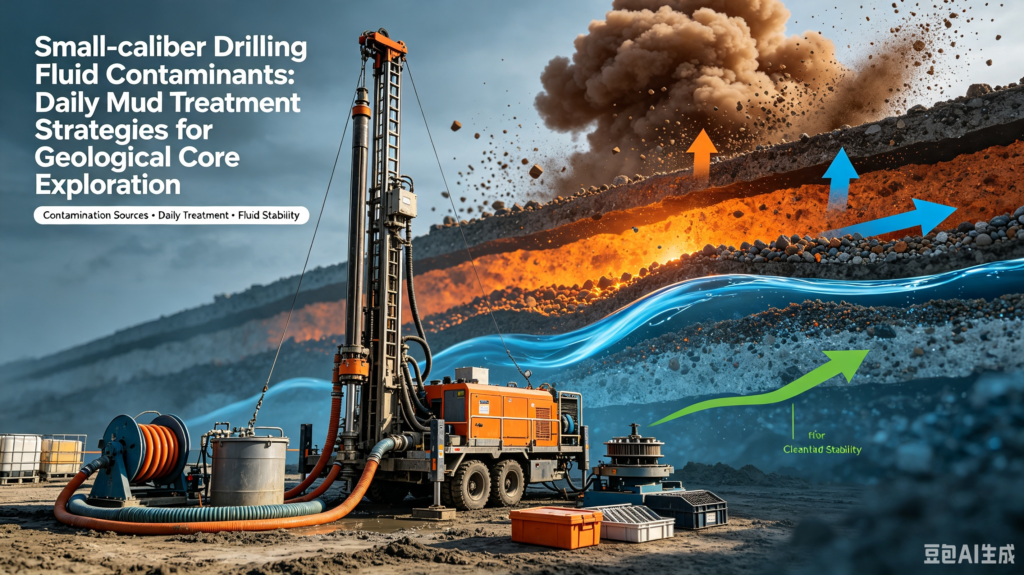
Portable On-Site Testing System: Real-Time Mud Quality Early Warning
Fast, on-site mud quality testing eliminates guesswork around contamination severity, requiring no laboratory equipment or specialized training for field drill technicians. Crews perform three quick tests every 60 meters of core advancement: marsh funnel viscosity measurement to track rising plastic viscosity from fine solids, filter press filtrate loss testing to detect salt-induced polymer breakdown, and simple titration to measure dissolved chloride salt concentrations. Recorded test values establish a clear baseline for uncontaminated small-caliber mud; once readings drift outside pre-set operational ranges, crews initiate targeted treatment rather than full mud replacement. This proactive testing schedule catches contamination early, when small additive adjustments can fully restore mud performance.
SanheRunjing Service Advantage: We have summarized and optimized a set of lightweight, low-threshold portable field testing specifications suitable for small-caliber drilling scenarios, matching the 60-meter fixed-distance cyclic detection standard. Our supporting on-site technical guidance simplifies professional testing procedures, enabling ordinary construction personnel to quickly complete viscosity monitoring, filtrate loss detection and salt content titration without laboratory support. Meanwhile, we provide standardized mud quality baseline parameter databases for different strata, helping crews accurately judge contamination levels. Real-time data monitoring realizes early warning and early intervention of potential contamination risks, avoiding performance deterioration caused by delayed treatment and eliminating unnecessary full-batch mud replacement.
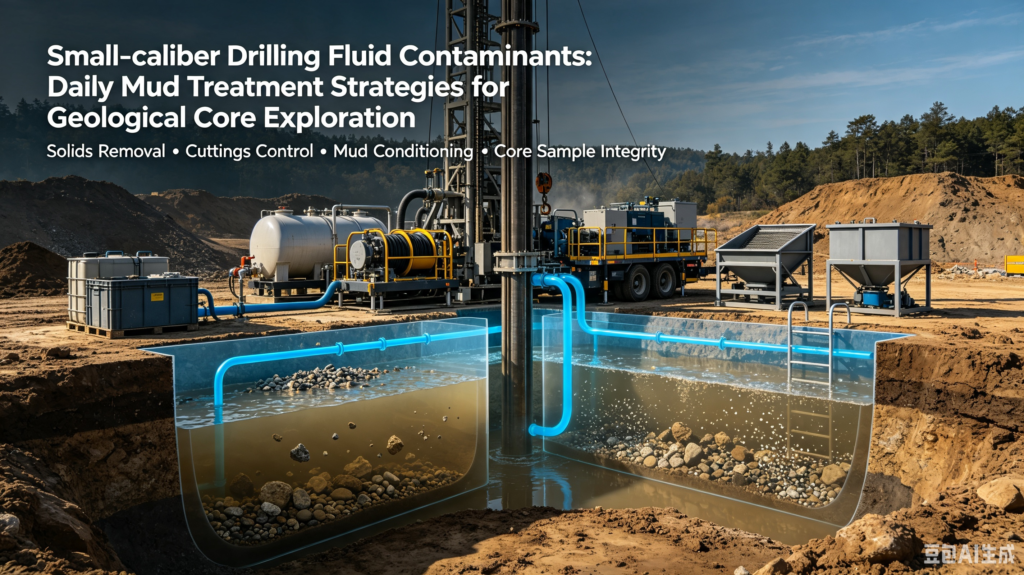
Classified Targeted Treatment Workflows for Three Typical Contaminations
Customized treatment sequences address each contaminant type without discarding usable mud volume. For excess fine solid loading, controlled freshwater dilution lowers overall mud density, paired with low-dose flocculant additives that bind tiny silt particles into large agglomerates filterable by the primary shale shaker. Salt contamination mitigation relies on soda ash pre-treatment to precipitate calcium and magnesium ions, plus supplementary polyamine inhibitors to re-stabilize damaged polymer chains. Organic humic contamination requires small doses of biocide to slow bacterial degradation, combined with fresh biopolymer additions to rebuild lost suspension gel strength. All treatments are applied incrementally in small batches to avoid over-adjusting mud rheology, preserving consistent small-caliber circulation performance through extended drilling runs.
SanheRunjing Self-Produced Product Solution: Aiming at three major contamination problems, our independently developed and produced full-series targeted treatment additives form a complete set of efficient and low-loss treatment workflows. Our high-efficiency environmental-friendly flocculants feature precise agglomeration for micron-level fine solids, which can efficiently separate ultra-fine silt particles that cannot be intercepted by ordinary screen meshes, with low dosage and no impact on mud basic rheology. The customized soda ash composite salt-removing stabilizer can rapidly precipitate hard water ions, repair damaged polymer hydration structures and restore mud filtration and suspension performance. The special biocide and complementary biopolymer formula effectively inhibit bacterial decomposition of organic pollutants, rebuild mud gel strength, and solve fluid destabilization problems caused by organic contamination. The incremental batch treatment process avoids rheological fluctuation caused by excessive adjustment, ensuring continuous and stable drilling fluid operation.
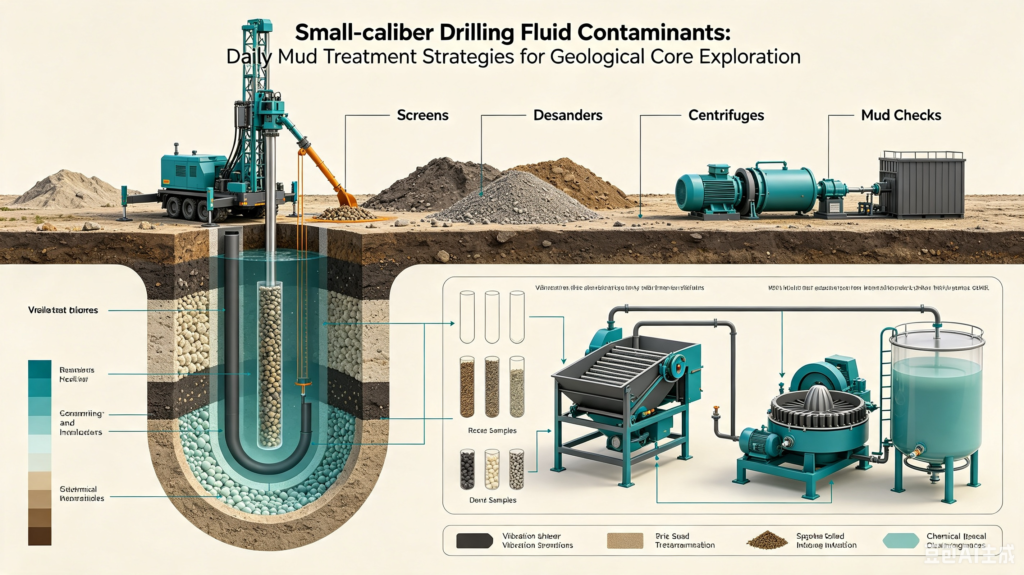
Remote Site Waste Reduction: Extend Mud Service Life and Reduce Compliance Costs
Remote wilderness exploration sites with limited waste haul access rely on contamination control workflows to cut waste mud generation drastically. Fully replacing contaminated mud produces large volumes of polluted fluid requiring containment and off-site transport, a costly logistical burden for isolated field camps. Targeted additive treatment extends usable mud lifespan by an average of 6 full boreholes before full replacement becomes necessary, slashing waste mud output by over 70% across multi-week remote drilling programs. For environmentally protected survey zones, reduced waste volume minimizes ground disturbance and cuts regulatory compliance paperwork tied to hazardous fluid disposal.
SanheRunjing On-Site Empowerment: For remote exploration and environmentally sensitive construction scenarios with difficult waste disposal and strict environmental requirements, our precise contamination treatment system maximizes the utilization rate of drilling fluid. Verified by field projects, our targeted additive treatment technology extends the average service life of single-batch mud by 6 boreholes, reduces waste mud discharge by more than 70%, and greatly saves the logistics transportation and harmless treatment costs of waste mud. Meanwhile, the low-residue and environmental-friendly characteristics of our supporting additives minimize surface soil and water disturbance, helping construction teams simplify environmental approval procedures, reduce compliance management pressure, and realize green and low-consumption drilling construction.
Standardized Daily Maintenance Routines: Fundamental Prevention of Contamination Accumulation
Long-duration deep slim core drilling projects benefit from standardized contamination prevention routines built into daily rig shutdown procedures. At the end of each drilling shift, crews run a 5-minute high-flow circulation flush to purge settled fine solids into surface settling tanks, allowing passive gravity separation overnight before resuming drilling the next morning. Shaker screens are inspected and cleaned daily to prevent particle bypass, and freshwater make-up fluid is pre-treated with soda ash before mixing into the active mud system to avoid introducing additional dissolved salts. These simple daily maintenance steps slow contaminant accumulation dramatically, stabilizing small-caliber drilling fluid quality for consistent core recovery, minimal downtime and reduced operational consumable costs across the full exploration campaign.
SanheRunjing Standardized Technical System: We have formulated a complete set of daily mud maintenance and contamination prevention specifications exclusive to small-caliber deep drilling projects, forming a normalized operation mechanism integrating shift flushing, daily inspection and water quality pre-treatment. Our on-site service teams guide construction crews to implement standardized high-flow circulating flushing, screen cleaning and water quality soda ash pre-treatment processes every day, fundamentally blocking the continuous accumulation of fine solids, salt ions and organic pollutants. The standardized daily management mode effectively delays mud performance attenuation, maintains long-term stability of drilling fluid rheology and sealing performance, ensures high core recovery rate and low downtime rate of deep slim hole drilling, and reduces overall project consumable costs.
As a comprehensive solution provider integrating drilling fluid material independent R&D, standardized production and full-process on-site technical services, SanheRunjing Technology focuses on the refined management pain points of small-caliber geological drilling fluid. Aiming at the common contamination failure problems in field construction, we rely on proprietary core technologies and self-produced high-efficiency additives to build a full-link technical system of real-time monitoring, classified treatment and daily prevention. We help drilling enterprises realize refined mud quality management, greatly extend drilling fluid service life, reduce waste discharge and construction costs, and achieve efficient, stable and green exploration operations.
At SanheRunjing, our fluids management experts engineer exclusive contamination control drilling fluid systems and standardized daily maintenance workflows tailored for small-caliber geological core drilling scenarios, providing full-process technical guidance and logistics support to keep your drilling program tighter from spud to TD. Contact us to learn how our professional contamination management solutions help reduce drilling consumable costs, improve mud utilization efficiency, and simplify on-site environmental compliance management.
At SanheRunjing, our fluids management experts engineer exclusive anti-leakage drilling fluid systems tailored for small-caliber slim hole fractured and porous stratum scenarios, and provide full-process technical support and logistics services to keep your drilling program tighter from spud to TD. Contact us to learn how our proprietary LCM technology and professional field services help reduce hidden project costs, stabilize construction progress, and simplify on-site management burden.
Check out other recent news:
5 Hidden Drilling Fluid Roadblocks Plaguing Small-caliber Geological Drilling
Solution for Water-Sensitive Swelling and Shrinkage Formation
Solution for Dissolution-prone Formations