

Solution
-
 Jul 31/2026
How to Tackle Moderate Water Gushing in Deep Geological Drilling (500–600m Depth)
-
 Jul 30/2026
Geological Drilling & Drilling Fluid Terminology
-
 Jul 30/2026
Distinguishing Hole Contraction and Hole Collapse in Geological Drilling
-
 Jul 28/2026
Comprehensive Guide to Drilling Fluid Key Parameters, Testing Methods & Professional Mud Solutions
-
 Jun 28/2026
4 Key Formation-Specific Drilling Fluid Formulation Strategies for Small-caliber Geological Coring
Geological Drilling & Drilling Fluid Terminology
Part 1 General Geological Drilling Terms
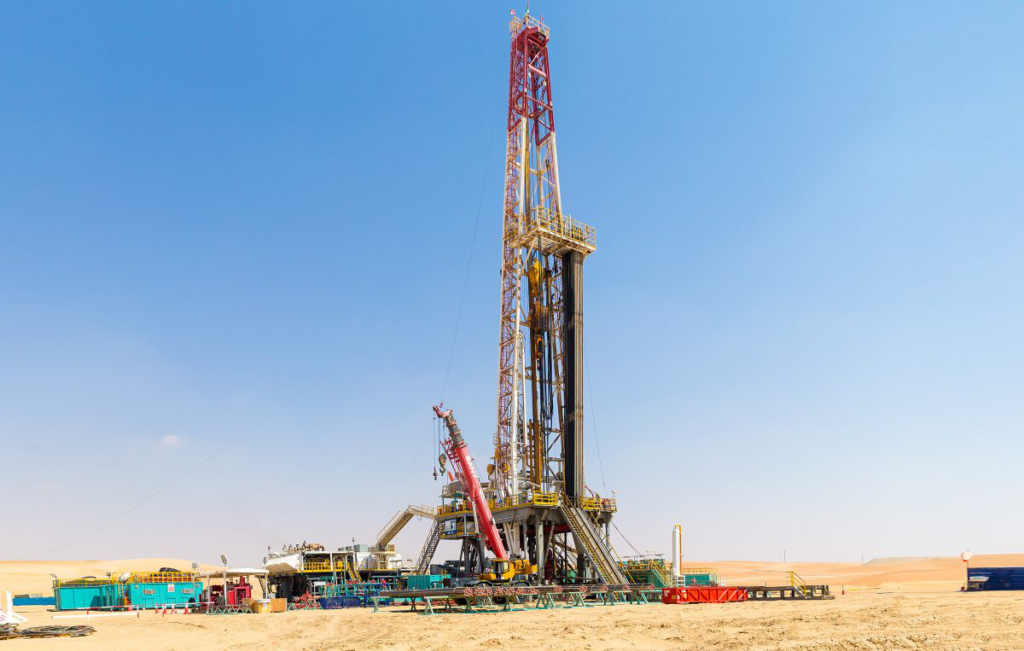 Drilling rig
1. Drilling Rig & Equipment
- Drilling rig
Complete integrated machinery set for breaking rock, running drill strings, circulating drilling fluid, pulling drill tools and conducting geological exploration drilling.
- Core drilling rig
Specialized exploration rig designed to retrieve intact solid core samples from underground formations for mineral, engineering and geological survey analysis.
- Exploration drill rig
Multi-functional rig applied in mineral prospecting, hydrogeological investigation and geotechnical reconnaissance, supporting coring and non-coring drilling modes.
- Rotary drilling rig
Dominant drilling equipment that rotates drill pipes and bits to crush rock formations, compatible with soft soil, mudstone and hard granite strata.
- Drill mast / Drill tower
Vertical load-bearing support structure for hoisting system, drill string and casing, providing vertical space for tripping operations.
- Drill pipe
Hollow tubular component forming the drill string, transmitting rotational torque and carrying drilling fluid circulation down to the bit.
- Drill collar
Thick-walled heavy tubular assembly installed above drill bit to provide sufficient weight on bit for rock breaking.
- Core barrel
Hollow inner and outer tube assembly for capturing and storing rock core during coring runs.
- Double tube core barrel
Coring tool with separated inner and outer tubes to reduce core erosion caused by circulating mud in fractured or swelling formations.
- Triple tube core barrel
Three-layer coring device for extremely broken, loose and water-sensitive strata to maximize core recovery rate.
- Drill bit
Bottom-hole cutting tool that contacts and breaks rock strata; categorized into diamond bit and carbide bit.
- Diamond bit
Hard rock cutting bit embedded with synthetic diamond particles for high penetration rate in compact hard bedrock.
- Carbide bit
Bit fitted with tungsten carbide inserts for soft-medium hard formations such as sandstone and mudstone.
- Casing
Steel pipe lowered into borehole to prevent hole collapse, isolate water-bearing layers and maintain borehole integrity.
- Surface casing
The first section of casing set at ground surface to seal loose overburden and shallow unconsolidated soil.
- Swivel
Top rotating component connecting drill string and mud pipeline, allowing mud to flow into hollow drill pipes while rotating.
- Rotary head
Power unit delivering rotational torque to the entire drill string on top of the mast.
- Hoist
Lifting winch system for tripping drill pipes, core barrels and casing into or out of borehole.
- Mud pump
High-pressure pump delivering drilling fluid from mud tanks downhole for hole cleaning and wellbore stabilization.
- Triplex mud pump
Three-cylinder reciprocating mud pump with stable flow rate, widely used in geological core drilling projects.
- Mud tank
Container for storing, mixing and conditioning drilling fluid, equipped with agitators and circulation pipelines.
- Shale shaker
Primary solids control equipment with vibrating screens to separate large rock cuttings from returning mud.
- Desander
Hydrocyclone device removing coarse sand particles suspended in drilling fluid after shale shaker treatment.
- Desilter
Smaller hydrocyclone unit separating fine silt particles that cannot be removed by desanders.
- Centrifuge
High-speed rotating separator extracting ultra-fine low-gravity solids from mud for low-solid drilling fluid maintenance.
- Degasser
Processing equipment eliminating entrained air and formation gas bubbles inside circulating mud to stabilize mud density.
- Mixing hopper
Venturi feeding device for rapid mixing of powdered additives and bentonite into base mud.
- Agitator
Stirring impeller installed in mud tanks to prevent solid weighting agents and clays from sedimentation.
2. Borehole & Drilling Operation
- Borehole / Wellbore
Underground cylindrical cavity formed by continuous rock breaking during drilling.
- Borehole diameter
Inner width measurement of the drilled hole, determined by bit outer diameter and casing specification.
- Drilling depth
Vertical or inclined distance from ground surface to the current bottom of the borehole.
- Core drilling
Drilling technology focusing on retrieving intact rock core samples for geological stratigraphic identification.
- Rotary drilling
Rock breaking method relying on rotational friction and cutting force of drill bits.
- Percussive drilling
Impact-based drilling technique using repeated hammer strikes to fragment hard rock formations.
- Wireline coring
Efficient coring process using inner tube retrieval cable without pulling out the whole drill string, saving tripping time.
- Dry drilling
Drilling operation without circulating liquid mud, adopted in shallow dry soil layers with no groundwater.
- Underbalanced drilling
Drilling mode where mud column pressure is lower than formation pore pressure to improve penetration rate.
- Core recovery
Percentage of intact rock core retrieved relative to total drilled core length, a key coring quality index.
- Core sample
Stratified rock specimen obtained from core barrels for lab geological testing and mineral analysis.
- Borehole deviation
Deviation of actual borehole trajectory from designed vertical or inclined drilling path.
- Vertical hole
Straight borehole with minimal horizontal deviation, used for most general geological exploration.
- Inclined hole
Directional borehole drilled at a designed tilt angle for dipping ore bodies and slope engineering surveys.
- Hole collapse
Instability failure of borehole wall where loose rock and clay slough into the wellbore.
- Lost circulation
Uncontrolled leakage of drilling fluid into fractured, porous or cavernous formations.
- Borehole wall stabilization
Comprehensive mud treatment and casing operation to maintain intact wellbore wall during drilling.
- Tripping
Complete process of pulling drill string out of hole or running drill string back down to bottom hole.
- Running casing
Operation of lowering steel casing pipes into borehole to seal unstable shallow formations.
- Pull out of hole
Tripping action to extract the entire drill string assembly from the borehole.
- Rate of Penetration (ROP)
Measurement of drilling footage per unit time, reflecting drilling efficiency of bits and mud system.
- Weight on Bit (WOB)
Vertical downward load applied on drill bit by drill collars to enhance rock cutting efficiency.
- Rotary speed
Rotational revolutions per minute of the drill string controlled by rotary head power unit.
- Circulation
Closed loop flow of drilling fluid: pumped down drill string, flowing through bit, returning upward through annulus to mud tanks.
- Circulation loss
General term for partial or full mud leakage into permeable underground formations.
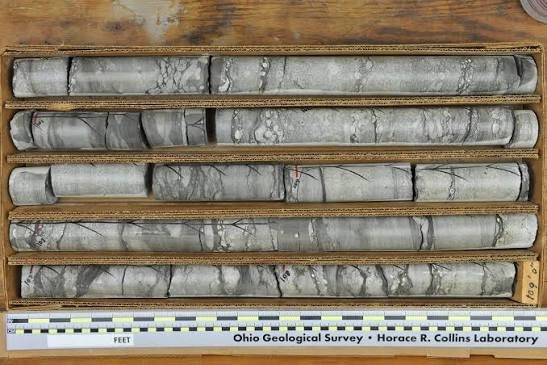 Core sample
3. Geological Formations
- Formation
Continuous stratigraphic rock layer with consistent lithology and geological age.
- Bedrock
Solid intact rock underneath loose overburden soil and gravel layers.
- Overburden
Unconsolidated surface soil, sand and gravel covering bedrock strata.
- Clay stratum
Water-sensitive soft layer rich in clay minerals prone to hydration swelling.
- Sand layer
Loose unconsolidated layer composed of fine to medium quartz sand particles.
- Gravel layer
Coarse unconsolidated stratum with large rock fragments and poor particle cementation.
- Fractured formation
Rock mass developed with dense natural cracks, highly prone to lost circulation and hole collapse.
- Fractured rock
Hard rock cut through by structural fissures and tectonic fractures.
- Aquifer
Permeable stratum storing and transmitting underground groundwater.
- Water bearing formation
General term for any stratigraphic layer containing movable pore water.
- Loose formation
Uncemented soil and gravel layers with poor self-supporting ability.
- Hard rock
Compact, high compressive strength rock such as granite, basalt and quartzite.
- Soft rock
Low-strength easily hydrated rock including mudstone, shale and argillite.
- Fault zone
Tectonic fracture zone with crushed broken rock, the highest risk formation for borehole instability.
- Mudstone
Fine-grained sedimentary rock rich in clay minerals with severe hydration swelling tendency.
- Sandstone
Cemented granular rock with high permeability, easy to cause mud circulation loss.
- Limestone
Carbonate rock containing natural solution cavities and fractures.
- Granite
Hard igneous bedrock requiring diamond bits for efficient coring.
- Swelling clay
High-montmorillonite clay that absorbs water and expands rapidly to shrink borehole diameter.
- Water sensitive formation
Strata containing clay minerals that deteriorate instantly when contacted with untreated water-based mud.
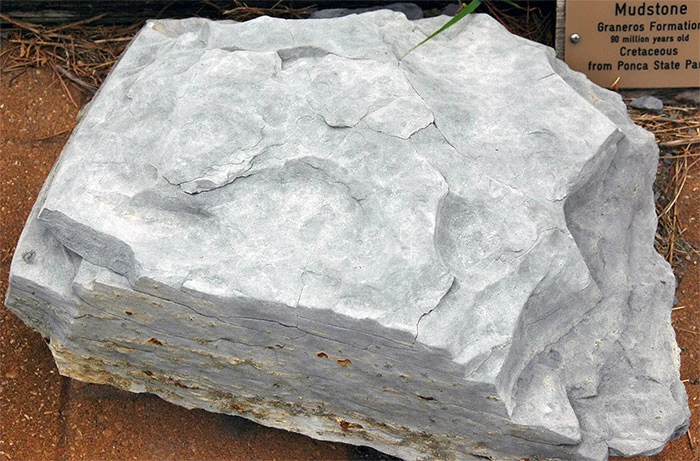 Mudstone
Part 2 Drilling Fluid (Drilling Mud) Complete Terminology
1. Drilling Fluid Classification
- Water-based drilling fluid (WBM)
Base fluid formulated with fresh water or salt water as continuous phase, low cost and widely used in geological core drilling.
- Fresh water mud
Mud mixed with surface fresh water, suitable for non-saline, low-hardness geological formations.
- Salt water mud
Water-based mud mixed with sodium chloride salt to suppress hydration of swelling clay strata.
- Saturated salt mud
Mud with saturated sodium chloride concentration for severe water-sensitive montmorillonite formations.
- Polymer water-based mud
Low-solid mud blended with high-molecular polymer additives for wellbore stabilization and filtration control.
- Inhibitive water-based mud
Special WBM with clay inhibitor additives to prevent clay swelling and borehole sloughing.
- Oil-based drilling fluid (OBM)
Mud with oil as continuous phase, excellent lubricity and strong anti-hydration performance for complex deep formations.
- Synthetic-based mud (SBM)
Environment-friendly synthetic hydrocarbon base fluid replacing traditional crude oil mud, low toxicity for eco-sensitive drilling sites.
- Invert emulsion mud
Emulsified OBM/SBM where water droplets disperse in continuous oil phase, high temperature resistant.
- Solid-free mud
Drilling fluid without inert bentonite solids, applied in shallow exploration drilling to reduce solid control burden.
- Low-solid mud
WBM with controlled low total solid content to maintain low viscosity and high penetration rate.
- Foam drilling fluid
Aerated lightweight mud with stable foam system for low-pressure depleted formations to avoid circulation loss.
- Aerated mud
Water mud mixed with compressed air to reduce overall mud density for underbalanced drilling.
- Clay mud
Simple base mud mixed only with bentonite clay, used for stable shallow hard rock drilling.
- Biodegradable drilling fluid
Environmentally degradable mud additives for drilling projects near farmland, rivers and protected ecological zones.
2. Mud Performance Test Parameters
Density Indicators
- Mud density / Fluid density
Mass of drilling fluid per unit volume, controlled to balance formation pore pressure and prevent borehole collapse.
- Mud balance
Portable measuring instrument to test field mud density on site.
- Specific Gravity (SG)
Ratio of mud density to pure water density, standard comparative density unit for drilling fluid.
- Low density mud
Light-weight mud with density below 1.05 g/cm³ for shallow low-pressure formations.
- High density mud
Weighted mud mixed with weighting agents to generate high hydrostatic pressure for high-pressure strata.
- Weighting agent
High-density solid powder added to increase mud density, such as barite and calcium carbonate.
Rheological Properties
- Viscosity
Internal flow resistance of drilling fluid, critical for suspending rock cuttings and carrying debris out of borehole.
- Funnel viscosity
Field quick-test viscosity measured by Marsh funnel, simple indicator for daily mud conditioning.
- Apparent Viscosity (AV)
Total fluid viscosity measured under standard rotational shear rate, combining plastic viscosity and yield point.
- Plastic Viscosity (PV)
Viscosity contribution from solid particle friction inside mud, reflecting content of inert suspended solids.
- Yield Point (YP)
Initial shear stress required to make mud flow, representing mud’s capacity to suspend drill cuttings statically.
- YP/PV ratio
Ratio of yield point to plastic viscosity, key index evaluating shear thinning performance of polymer mud.
- Gel strength
Static shear stress formed when mud stays static, determining cutting suspension ability during pump shutdown.
- Initial gel strength
Gel strength measured after mud stands static for 10 seconds.
- 10-min gel strength
Gel strength measured after 10 minutes static standing, also called final gel strength.
- Shear force
Mechanical cutting force applied to mud by drill string rotation and mud pump circulation.
- Shear thinning
Desirable mud property where viscosity drops under high shear flow and recovers under static conditions.
- Rheometer
Lab precision instrument measuring full rheological curve and all mud rheology parameters.
- Flow curve
Graph plotting mud shear stress against shear rate to analyze fluid flow behavior.
Filtration & Wall Building Performance
- Fluid loss / Filtration loss
Volume of liquid filtrate leaking from mud into porous formation under pressure.
- API fluid loss
Standard low-temperature low-pressure filtration test specified by American Petroleum Institute.
- High Temperature High Pressure fluid loss (HTHP)
Filtration loss tested under simulated deep borehole high temperature and pressure conditions.
- Filter cake
Dense solid film deposited on borehole wall when mud filtrate penetrates formation pores.
- Thin filter cake
Dense, low-thickness filter cake formed by qualified mud additives to reduce filtration loss.
- Filter cake thickness
Measured thickness of solid cake after standard filtration test, excessive thickness causes high pipe friction.
- Wall building property
Mud’s ability to form compact impermeable filter cake on borehole wall to block filtrate invasion.
- Filter paper
Standard porous paper used inside filter press for fluid loss measurement.
- Filter press
Lab testing device to quantify API and HTHP filtration loss values.
Solid, Sand & Oil Content
- Solid phase
All suspended solid particles contained in drilling fluid, divided into low-gravity and high-gravity solids.
- Low solid content
Target control standard for polymer mud to minimize flow resistance and bit balling risk.
- High solid content
Excessive accumulated rock cuttings and clay solids leading to high viscosity and slow penetration rate.
- Sand content
Volume percentage of coarse inert sand particles in mud, high sand content accelerates pump and bit abrasion.
- Sand content tester
Glass graduated measuring cylinder for field sand content quantification.
- Oil content
Volume percentage of base oil or lubricant additive inside oil-based mud.
- Retort analysis
Distillation lab test separating mud into water, oil and solid phases for content calculation.
- Suspended solids
Solid particles floating evenly in circulating mud without sedimentation.
- Cuttings solids
Rock debris generated by bit rock breaking, the main source of low-gravity solids.
- Low Gravity Solid (LGS)
Light solid particles including bentonite, rock cuttings and fine silt.
- High Gravity Solid (HGS)
Heavy weighting agent solids such as barite powder added to raise mud density.
Chemical & Ion Properties
- pH value
Acidity-alkalinity index of mud, controlled between 8.5–10.5 for stable polymer additive performance.
- Alkalinity
Total concentration of alkaline ions in mud resisting acid formation contamination.
- Total alkalinity
Overall alkaline content measured via titration to monitor mud chemical stability.
- Calcium ion
Ca²⁺ cations invading mud from gypsum and limestone formations, damaging polymer mud performance.
- Magnesium ion
Mg²⁺ ions from magnesium-rich strata causing flocculation of bentonite clay.
- Chloride ion
Cl⁻ salt ions from saline aquifers, used to calculate formation water salinity.
- Chloride content
Measured chloride concentration to judge salt contamination degree of drilling fluid.
- Salinity
Total dissolved salt concentration in mud aqueous phase.
- Total Dissolved Solids (TDS)
Mass of all dissolved inorganic salts in mud filtrate per liter.
- Hardness
Combined calcium and magnesium ion concentration causing mud chemical contamination.
- Corrosivity
Mud’s ability to corrode steel drill pipes and casing under downhole temperature.
- Corrosion inhibitor
Additive coating metal surfaces to reduce electrochemical corrosion from saline mud.
Auxiliary Mud Performance
- Lubricity
Mud’s friction reduction capacity between drill string and borehole wall.
- Lubricity coefficient
Quantitative index measuring friction resistance of mud for metal-rock contact.
- Anti-swelling capacity
Inhibitor mud performance restricting montmorillonite clay water absorption and expansion.
- Temperature resistance
Maximum temperature mud additives can withstand without chemical decomposition.
- Thermal stability
Retention of original mud properties after long exposure to high downhole temperature.
- Anti-collapse performance
Comprehensive mud capacity to stabilize fractured, swelling and broken borehole walls.
- Anti-leakage property
Mud system’s ability to plug porous and fractured formations and reduce lost circulation.
- Flocculation
Undesirable particle aggregation caused by salt/calcium contamination leading to high mud viscosity.
- Dispersion
Uniform distribution of clay and polymer particles in mud without agglomeration.
- Compatibility
Stable coexistence of multiple mud additives without chemical reaction or performance failure.
- Foaming tendency
Tendency of mud to generate stable bubbles after gas invasion or over-dosing foaming additives.
- Defoaming performance
Additive ability to eliminate foam and recover accurate mud density readings.
3. Drilling Fluid Additives & Chemicals
Base Mud Raw Materials
- Bentonite
Natural clay mineral rich in montmorillonite, the basic viscosifier for water-based mud.
- Sodium bentonite
High-swelling sodium-type bentonite for fresh water base mud preparation.
- Calcium bentonite
Low-swelling calcium-based clay requiring soda ash activation before mud mixing.
- Attapulgite
Needle-shaped clay mineral maintaining viscosity under high salt contamination conditions.
- Sepiolite
Salt-resistant fibrous clay for saturated salt drilling fluid systems.
- Clay
General term for natural soil clay used in simple shallow drilling mud.
Weighting Agents
- Barite / Barium sulfate
Primary weighting mineral powder with high specific gravity, non-toxic and widely used worldwide.
- Hematite
Iron oxide weighting agent for ultra-high density mud systems.
- Calcium carbonate
Light weighting and bridging agent for low-density mud and temporary plugging.
- Manganese tetraoxide
High-density weighting material applied in special high-pressure drilling operations.
Filtration Control Agents
- Sodium Carboxymethyl Cellulose (CMC)
Water-soluble cellulose polymer reducing API and HTHP fluid loss in fresh water mud.
- High-viscosity CMC
Grade CMC mainly used to increase mud viscosity and suspension capacity.
- Low-viscosity CMC
Low molecular weight CMC focusing on filtration control without excessive viscosity rise.
- Polyanionic Cellulose (PAC)
Salt-resistant cellulose derivative stable in saline and calcium-contaminated mud systems.
- PAC-LV
Low-viscosity polyanionic cellulose for filtration control in weighted high-density mud.
- PAC-HV
High-viscosity polyanionic cellulose for viscosity building in low-solid polymer mud.
- Modified starch
Biodegradable natural polymer controlling fluid loss in eco-friendly shallow drilling mud.
- Sulfonated phenolic resin (SMP)
High-temperature resistant synthetic resin controlling HTHP filtration loss in deep hot formations.
- Sulfonated lignite (SMC)
Low-cost natural coal derivative combining filtration control and viscosity reduction functions.
- Sulfonated asphalt
Modified asphalt forming flexible filter cake to seal micro-fractures and prevent clay hydration.
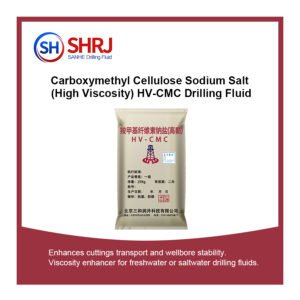 HV-CMC |
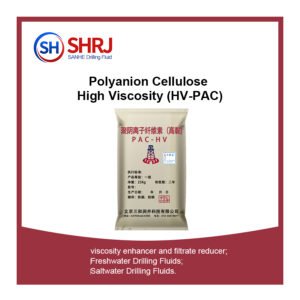 PAC-HV |
Clay Inhibitors & Anti-Collapse Additives
- Potassium chloride (KCl)
Common inorganic inhibitor releasing potassium ions to enter clay crystal layers and stop water absorption.
- Ammonium chloride
Low-cost inorganic clay inhibitor for mild swelling clay formations.
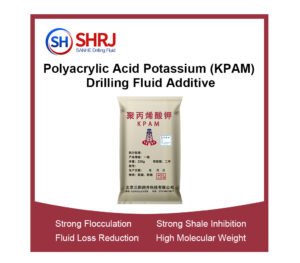
- Potassium polyacrylate (K-PAM)
Anionic polymer encapsulating clay particles to isolate formation water.
- Polyamine inhibitor
Cationic polyamine additive with strong long-term anti-swelling performance for complex water-sensitive strata.
- Quaternary ammonium salt
Cationic surfactant inhibitor adsorbing tightly on clay mineral surfaces.
- Glycol / Polyglycol
Water-soluble polyether forming protective film on borehole wall to suppress shale swelling.
- Silicate
Inorganic silicate agent forming impermeable silicate film on fractured rock surfaces.
- Cationic polymer
High-molecular cationic polymer encapsulating cuttings and clay to prevent hydration dispersion.
Viscosifiers & Gel Strength Enhancers
- Xanthan gum
Biopolymer with outstanding shear thinning and salt resistance for low-solid mud.
- Guar gum
Natural plant gum rapidly increasing mud viscosity and cutting suspension capacity.
- Polyacrylamide (PAM)
High-molecular polymer for viscosity building, clay encapsulation and solid flocculation.
- Amphoteric polymer
Dual-charge polymer compatible with both anionic and cationic mud additives.
- Hydroxyethyl Cellulose (HEC)
Non-ionic cellulose viscosifier stable in high-salinity brine mud.
Thinners & Dispersants
- Ferrochrome lignosulfonate (FCLS)
Traditional lignin-based dispersant breaking clay flocculation to reduce mud viscosity.
- Calcium lignosulfonate
Calcium salt lignin thinner suitable for medium-temperature fresh water mud systems.
- Sodium lignosulfonate
Sodium-type lignosulfonate dispersant with better salt contamination tolerance.
- Organic phosphate
High-temperature anti-flocculation thinner for deep well high-density mud.
- Sulfonated styrene copolymer
Synthetic polymer dispersant maintaining stable rheology under HTHP conditions.

Lubricants
- Mineral oil lubricant
Refined petroleum oil reducing friction between drill string and borehole wall.
- Vegetable oil ester
Biodegradable ester lubricant for environmentally restricted drilling projects.
- Graphite
Solid layered lubricant filling micro-fractures on filter cake to lower friction coefficient.
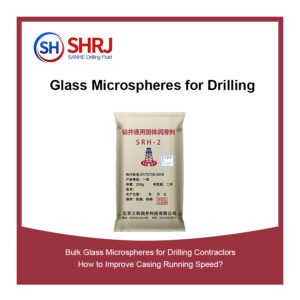
- Glass bead
Micro-spherical solid lubricant reducing metal-rock contact friction.
- Extreme pressure lubricant
Special lubricant forming anti-wear film under high downhole contact pressure.
Defoamers
- Silicone defoamer
High-efficiency organosilicon additive eliminating stable foam in salt water polymer mud.
- Polyether defoamer
Water-soluble polyether antifoam agent suitable for low-temperature shallow drilling mud.
Lost Circulation Materials (LCM)
- Bridging agent
Particle-sized solid material forming physical bridge across formation fracture openings.
- Calcium carbonate fine powder
Fine particle bridging agent for micro-fracture temporary plugging.
- Mica
Flaky mineral sealing thin formation cracks to reduce filtrate and mud leakage.
- Walnut shell powder
Elastic granular LCM for medium-width fracture plugging.
- Cotton fiber
Soft fibrous material filling irregular fracture voids to form flexible plugging layer.
- Sawdust
Low-cost plant fiber lost circulation material for shallow low-pressure fractured formations.
- Plugging polymer
Cross-linkable polymer gel forming elastic sealing layer inside large fractures.
- Rigid plugging agent
Hard mineral powder forming rigid physical bridge for wide open fractures.
- Flexible plugging agent
Elastic granular material adapting to variable fracture opening sizes under formation pressure.
Biocide, Corrosion Inhibitor & pH Adjusters
- Biocide / Bactericide
Microbe-killing additive preventing polymer degradation caused by anaerobic bacteria in mud tanks.
- Corrosion inhibitor
Film-forming chemical reducing electrochemical rust of steel drill tools and casing.
- Caustic soda / Sodium hydroxide (NaOH)
Strong alkali to raise mud pH value and activate bentonite clay particles.
- Soda ash / Sodium carbonate (Na₂CO₃)
Softening agent removing calcium contamination and activating calcium bentonite.
- Lime / Calcium hydroxide
Alkaline additive adjusting mud alkalinity and treating gypsum contaminated formations.
4. Solids Control System
- Mud circulation system
Complete closed-loop pipeline and tank system transporting mud from pump to borehole and back to processing tanks.
- Mud pit
General term for all mud storage, mixing and settling tanks at drilling site.
- Reserve pit
Standby tank storing pre-conditioned spare mud for emergency hole stabilization.
- Settling pit
Static sedimentation tank allowing coarse rock cuttings to sink to tank bottom naturally.
- Mud cleaner
Combined shale shaker and hydrocyclone integrated unit for secondary solids removal.
- Mud gun
High-pressure jet nozzle stirring tank bottom to prevent solid weighting agent sedimentation.
- Mixing tank
Special tank equipped with mixing hopper for preparing fresh base mud and adding chemical additives.
- Waste cuttings
Solid rock debris separated out by solids control equipment requiring environmental treatment before discharge.
- Mud waste treatment
Process of treating waste drilling mud and cuttings to meet local environmental discharge standards.
5. Downhole Mud Problems & Malfunctions
- Hole collapse / Borehole sloughing
Wellbore wall rock falls into borehole due to insufficient mud density or poor clay inhibition.
- Clay swelling
Montmorillonite clay absorbs mud filtrate, expands and narrows borehole diameter.
- Bit balling
Sticky clay accumulates and wraps drill bit cutting surface, blocking rock breaking and circulation flow paths.
- Pipe sticking
Drill string immobilized inside borehole caused by filter cake adhesion or cuttings accumulation.
- Differential pressure sticking
Pipe stuck by pressure difference between mud column and formation across thick filter cake.
- Severe fluid loss
Excessive filtrate invading formation leading to thick filter cake and borehole instability.
- Excessive viscosity
Over-high mud flow resistance caused by over-dosing polymers or heavy solid contamination.
- Mud foaming
Large volume of bubbles trapped in mud after gas cut, reducing effective mud density.
- Salt contamination
Formation brine invades mud, causing bentonite flocculation and rheology deterioration.
- Calcium contamination
Calcium ions from gypsum/limestone destroy polymer molecular structure and raise mud viscosity sharply.
- Gypsum contamination
Calcium sulfate formation invasion generating massive flocculation of water-based mud.
- Gas cut mud
Formation gas mixes into circulating mud, lowering hydrostatic pressure and risking borehole collapse.
- Solids overload
Uncontrolled accumulation of rock cuttings solids overwhelming solids control equipment capacity.
- Poor filter cake
Porous, thick and loose filter cake caused by insufficient filtration control additives.
- High friction resistance
Elevated drag force between drill string and borehole wall from low mud lubricity.
6. On-Site Mud Operation Terms
- Mud mixing / Mud preparation
Complete procedure of mixing bentonite, water and chemical additives to prepare qualified base mud.
- Premix
Pre-dissolve high-concentration polymer additive solution before adding into main mud tank.
- Mud dilution
Add fresh water to reduce mud density and cut excessive solid concentration.
- Mud conditioning
Adjust mud rheology, filtration and inhibition performance by targeted additive dosing.
- Mud treatment
Comprehensive chemical remediation of contaminated mud to recover original performance.
- Circulating mud
Maintain continuous pump circulation to suspend cuttings and evenly distribute additives.
- Mud sampling
Collect representative mud samples from return flow for lab performance testing.
- Mud testing
Carry out density, viscosity, fluid loss and chemical index measurement on site or laboratory.
- Maintain mud property
Continuous daily additive adjustment to stabilize mud performance during long drilling runs.
- Discharge waste mud
Treat and discharge spent drilling mud after reaching service life.
- Mud recycling
Process returned mud via solids control equipment for repeated circulation use.
Part 3 Common Industry Abbreviations
- WBM – Water-Based Mud: Water-continuous phase drilling fluid system
- OBM – Oil-Based Mud: Oil-continuous phase invert emulsion drilling mud
- SBM – Synthetic-Based Mud: Eco-friendly synthetic hydrocarbon base drilling fluid
- PV – Plastic Viscosity: Rheology parameter reflecting inert solid friction
- YP – Yield Point: Index measuring static cutting suspension capacity
- AV – Apparent Viscosity: Total measured viscosity under standard shear rate
- HTHP – High Temperature High Pressure: Simulated deep downhole test condition
- API – American Petroleum Institute: Global standard organization for mud test methods
- LCM – Lost Circulation Material: Additive for plugging fractured leak zones
- ROP – Rate of Penetration: Drilling footage per hour evaluating drilling efficiency
- WOB – Weight on Bit: Vertical load applied onto drill bit for rock breaking
- CMC – Carboxymethyl Cellulose: Common water-based mud filtration control polymer
- PAC – Polyanionic Cellulose: Salt-resistant cellulose filtration reducer
- PAM – Polyacrylamide: Multi-functional polymer for inhibition and viscosity building
- TDS – Total Dissolved Solids: Total dissolved salt concentration in mud filtrate
- SG – Specific Gravity: Relative density of drilling fluid compared to pure water
- LGS – Low Gravity Solid: Light solid particles from bentonite and rock cuttings
- HGS – High Gravity Solid: Heavy weighting agent solids such as barite powder
Contact Us
Company Name: SanheRunjing Technology Co., Ltd.
Core Business: R&D & production of drilling fluid additives, drilling fluid testing technical guidance, drilling construction technical service
Location: Room 305, 3rd Floor, Building 1, Yard 7, Guangyang New Road, Fangshan District, Beijing, China
Check out other recent news:
Distinguishing Hole Contraction and Hole Collapse in Geological Drilling
Comprehensive Guide to Drilling Fluid Key Parameters, Testing Methods & Professional Mud Solutions
4 Key Formation-Specific Drilling Fluid Formulation Strategies for Small-caliber Geological Coring