

Solution
-
 Jul 31/2026
How to Tackle Moderate Water Gushing in Deep Geological Drilling (500–600m Depth)
Jul 31/2026
How to Tackle Moderate Water Gushing in Deep Geological Drilling (500–600m Depth)
-
 Jul 30/2026
Geological Drilling & Drilling Fluid Terminology
Jul 30/2026
Geological Drilling & Drilling Fluid Terminology
-
 Jul 30/2026
Distinguishing Hole Contraction and Hole Collapse in Geological Drilling
Jul 30/2026
Distinguishing Hole Contraction and Hole Collapse in Geological Drilling
-
 Jul 28/2026
Comprehensive Guide to Drilling Fluid Key Parameters, Testing Methods & Professional Mud Solutions
Jul 28/2026
Comprehensive Guide to Drilling Fluid Key Parameters, Testing Methods & Professional Mud Solutions
-
 Jun 28/2026
4 Key Formation-Specific Drilling Fluid Formulation Strategies for Small-caliber Geological Coring
Jun 28/2026
4 Key Formation-Specific Drilling Fluid Formulation Strategies for Small-caliber Geological Coring
Lost Circulation in Slim Geological Boreholes: The Overlooked Hidden Cost of Improper Drilling Fluid Design
Lost Circulation in Slim Geological Boreholes: The Overlooked Hidden Cost of Improper Drilling Fluid Design
From this Blog, you will know:
– Why Slim Boreholes Face Far Higher Lost Circulation Risks Than Conventional Oilfield Wells
– Scientific LCM Selection Rules Tailored Exclusively for Small-Caliber Drilling Fluid Systems
– Field-Ready Emergency Workflows to Stop Fluid Loss Without Drilling Shutdowns
– Real Project Data: The Hidden Economic Losses and Low-Cost Prevention Solutions
For geological drilling operators focused on core recovery and project timeline delivery, lost circulation rarely ranks as a top-tier operational risk—until fractured bedrock, porous sandstone or karst limestone formations drain circulating drilling fluid into subsurface voids mid-drill. Most crews classify fluid loss as a minor material waste expense, failing to calculate the cascading secondary costs triggered by unmanaged lost circulation: full drilling shutdowns, unrecoverable core samples, damaged boreholes requiring re-drilling, extended rig rental periods and overtime labor fees. Small-caliber slim geological boreholes carry disproportionately higher relative leakage risk compared to large oilfield wells, a critical distinction overlooked by drill teams relying on generic off-the-shelf mud without targeted lost circulation material (LCM) additives. This Blog explains why small-caliber geometry amplifies circulation loss hazards, outlines LCM selection criteria matched to slim mud rheology, shares on-the-fly emergency mud treatment procedures for mid-drill leakage, quantifies total hidden cost burdens and establishes preventative fluid formulation standards for fractured and porous strata coring campaigns.
As a professional drilling fluid technology enterprise integrating independent R&D, standardized production and on-site technical services, SanheRunjing Technology has long focused on the high-incidence pain point of lost circulation in small-caliber slim hole drilling. With independent intellectual property rights of targeted anti-leakage drilling fluid technology, self-produced graded LCM series products and mature field leakage prevention and control schemes, we have solved the industry-wide problem that generic oilfield mud and conventional coarse-grained leakage plugging materials are incompatible with slim borehole construction. We help drilling teams avoid massive hidden losses caused by neglected fluid leakage risks, and form a full-cycle solution covering pre-drilling prevention, in-drilling emergency disposal and post-construction risk optimization for fractured and porous complex strata.
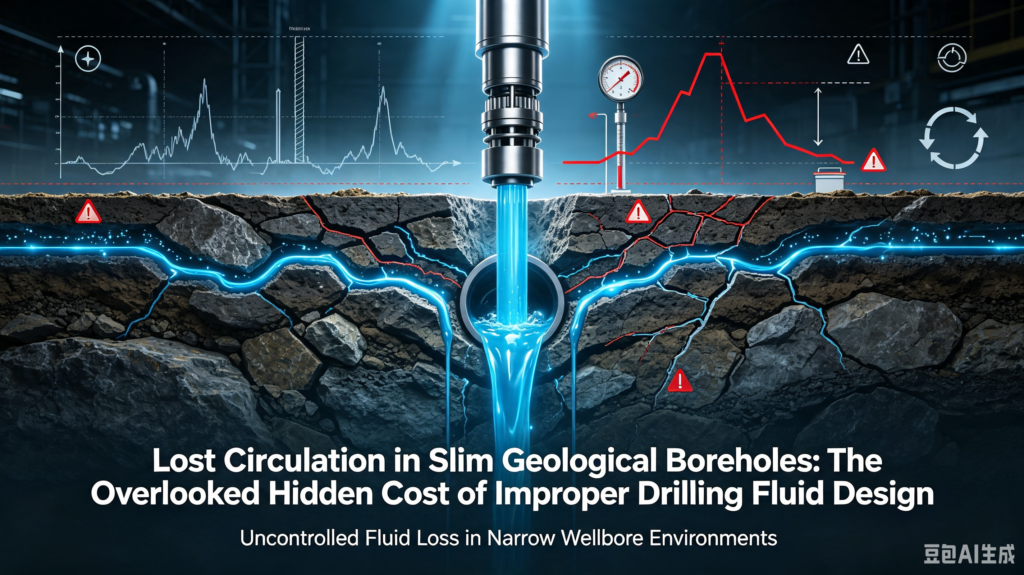
Why Slim Boreholes Bear More Severe Lost Circulation Risks Than Conventional Wells
The fundamental geometric reason slim boreholes suffer worse relative lost circulation stems from surface area-to-fluid volume ratios. A 96mm slim core borehole exposes far more formation wall surface per cubic meter of circulating mud than a 300mm oilfield well. Even tiny natural fractures or pore networks absorb fluid rapidly, depleting the mud system’s active volume in minutes. When fluid levels drop below pump intake depth, circulation collapses entirely, forcing crews to pause drilling, mix replacement mud batches and attempt to seal permeable zones before resuming coring. In deep slim holes exceeding 150 meters depth, hydrostatic pressure increases with depth, driving faster fluid infiltration into open formation voids and worsening leakage severity over time. Generic bentonite mud forms thin, fragile filter cakes incapable of bridging small fractures, leaving subsurface flow paths permanently open to mud loss.
SanheRunjing Technical Analysis: Most small-caliber drilling failures caused by fluid loss stem from mismatched fluid formulas that ignore slim hole geometric characteristics. Conventional universal mud formulas are designed for large-diameter oilfield wells and cannot adapt to the high specific surface area and high hydrostatic pressure penetration characteristics of deep slim holes. Relying on unmodified bentonite mud will inevitably lead to unstable filter cake structure and failure to block micro-fractures. Targeting this scenario feature, SanheRunjing’s customized anti-leakage drilling fluid system optimizes mud rheological parameters for slim hole geometric rules, improves filter cake compactness and pressure resistance, and fundamentally solves the problem of easy leakage and difficult plugging of small-caliber boreholes in fractured and porous strata.
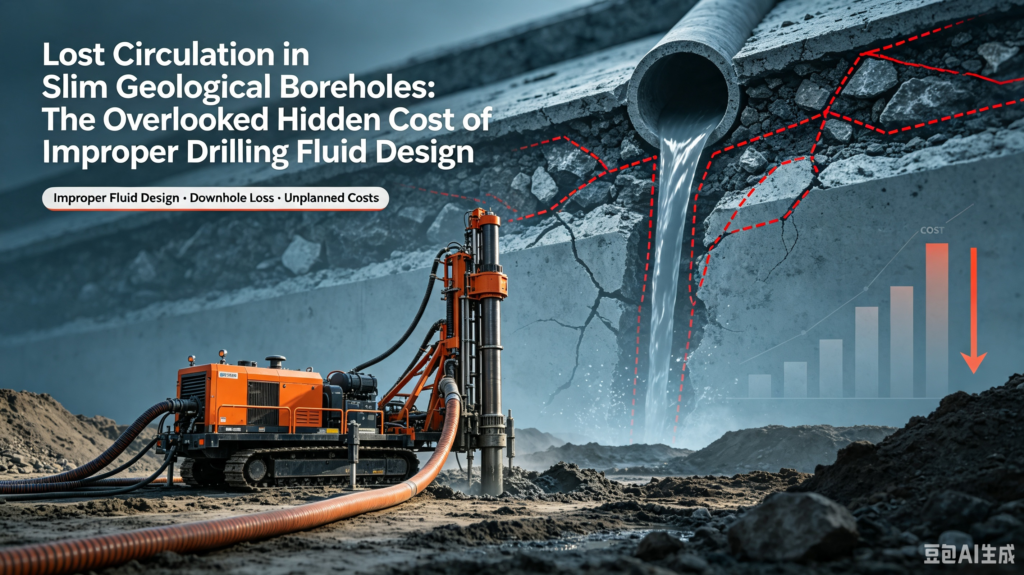
Scenario-Based LCM Selection Rules Exclusive to Small-Caliber Drilling Systems
Selecting compatible lost circulation materials for small-caliber mud systems requires strict sizing rules absent from large well LCM guidelines. Conventional coarse flaky mica, large nut hulls and coarse calcium carbonate particles designed for oilfield wells cannot pass through slim drill rod internal flow channels, risking blockages and complete circulation loss. Small-caliber LCM blends rely on ultra-fine graded cellulose fibers, micronized calcium carbonate and soft granular starch particles sized below 0.3 millimeters, small enough to flow freely through narrow rod bores while stacking tightly inside micro-fractures to form an impermeable bridging seal. Formulations separate into two tiers: light-load preventative LCM mixed into base mud for slightly porous sand formations, and concentrated heavy LCM slurry pumped as a loss circulation squeeze treatment for severe fractured bedrock leakage events.
SanheRunjing Product Advantages: Breaking the limitation of traditional coarse-grained plugging materials, our self-developed and self-produced special LCM series for small-caliber drilling adopts precise ultra-fine grading technology, with all particle sizes strictly controlled below 0.3mm. The composite formula of biodegradable cellulose fibers, micronized calcium carbonate and modified starch particles is exclusively tailored for slim drill rod pore diameters and micro-fracture plugging scenarios. We have formed two standardized product systems: light-load preventative LCM for daily porous stratum construction and heavy-duty concentrated LCM slurry for severe fractured stratum leakage. The products feature unobstructed circulation, fast bridging and rapid filter cake solidification, avoiding the dual risks of drill rod blockage and incomplete fracture plugging caused by mismatched conventional materials, and filling the gap of special LCM materials for small-caliber geological drilling in the industry.
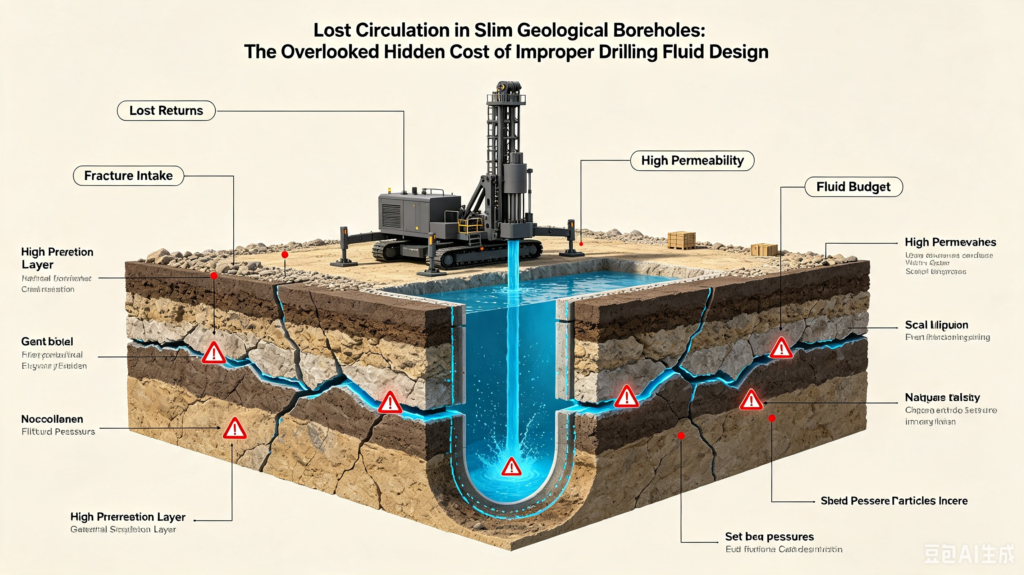
Efficient Emergency On-Site Workflows for Zero-Shutdown Leakage Control
Emergency on-site mud treatment workflows stop active small-caliber fluid loss without full rig shutdown. Upon observing rapid mud level drop in surface tanks, crews immediately reduce pump flow rate to lower borehole hydrostatic pressure, slowing fluid infiltration into fractures. Pre-mixed concentrated LCM slurry is added directly to the active circulation tank in 200-liter batches, circulated slowly through the borehole for 10–15 minutes to allow bridging particles to deposit across permeable zones. Operators hold static circulation for a 30-minute soak period to solidify the filter cake seal before gradually restoring standard drilling flow rates. This simple response procedure stops 90% of moderate small-caliber lost circulation incidents without abandoning the current borehole.
SanheRunjing On-Site Service Guarantee: Based on years of field construction experience, we have summarized and sorted out a set of streamlined, easy-to-operate emergency anti-leakage workflows suitable for small rigs and slim hole scenarios. Our on-site technical service teams can provide real-time guidance for emergency disposal during construction. Meanwhile, our pre-mixed finished LCM slurry eliminates the need for on-site complex proportioning and preparation, enabling rapid batch feeding. The standardized operation process of pressure reduction circulation, slow bridging deposition and static soaking solidification ensures that 90% of moderate leakage faults can be quickly rectified without drilling shutdown or borehole abandonment, greatly improving emergency response efficiency and reducing construction interruption losses.
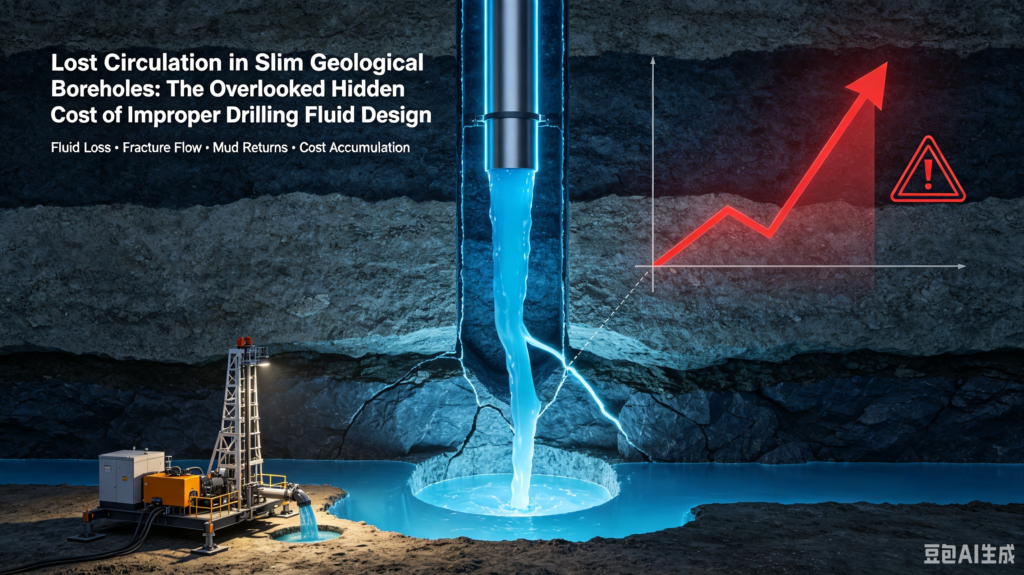
Quantified Hidden Economic Losses & Low-Cost Preventative Solutions
Quantifying the hidden financial impact of untreated small-caliber fluid loss reveals staggering unplanned overhead across exploration projects. Industry cost data from 67 mineral drilling programs in fractured terrain shows boreholes with unmitigated lost circulation average 2.8 extra hours of rig idle time per leakage event, plus $130–$380 in wasted mud additives per incident. For projects with repeated leakage across multiple boreholes, total combined costs of rig rental overtime, extra mud materials and re-drilling collapsed hole sections can inflate overall project budgets by 12–18%. By contrast, pre-blending preventative fine-grade LCM into small-caliber base mud adds only $45 of material cost per borehole, eliminating nearly all leakage-related downtime and overspending.
SanheRunjing Cost-Effective Empowerment: Our whole-process anti-leakage solution achieves precise cost control with low investment and high return. Compared with the huge hidden cost of equipment idle, material waste and re-drilling caused by unregulated leakage, the cost of adding our special fine-grade preventative LCM during mud base mixing is extremely low. Verified by mass field projects, the material cost per borehole is only about $45, which can completely avoid the 12–18% project budget overrun caused by lost circulation. We help drilling enterprises convert passive emergency leakage plugging into active pre-prevention, effectively reducing unplanned project overhead and improving overall project profit margins.
Preventative Fluid Design: Long-Term Fundamental Strategy to Eliminate Leakage Risks
Preventative fluid design remains the most cost-effective strategy to mitigate small-caliber lost circulation long-term. All drilling mud batches scheduled for fractured limestone, fractured granite or high-porosity sandstone coring should include low concentrations of fine bridging LCM during initial mixing, rather than waiting for leakage to occur. Regular filtrate loss testing every 50 meters of core advancement monitors filter cake integrity; rising filtrate loss values signal weak wall sealing, triggering supplementary LCM additions before full fluid loss develops. As geological exploration targets deeper, more fractured subsurface formations expand worldwide, small-caliber drill operators who integrate lost circulation control into core mud design will eliminate one of the field’s most costly hidden operational risks.
SanheRunjing Technical Standard: We have formed a standardized full-cycle preventative anti-leakage technical system for complex strata. Relying on independent R&D formula optimization capability, we embed targeted fine bridging LCM materials into the initial mud batching process for high-risk fractured and porous strata, realizing inherent anti-leakage performance of drilling fluid. Cooperated with the 50-meter fixed-distance fluid loss detection mechanism and dynamic formula adjustment service, we realize real-time monitoring of filter cake sealing performance, take early intervention measures for potential leakage risks, and completely eliminate hidden dangers of large-scale fluid loss from the source. This proactive fluid design standard has become a reliable technical guarantee for high-efficiency and low-cost construction of deep and complex small-caliber drilling projects.
As a professional provider of drilling fluid material R&D and production, customized formula design and full-process on-site technical services, SanheRunjing Technology always focuses on the hidden pain points and cost waste in segmented small-caliber drilling scenarios. Aiming at the high-risk problem of slim hole lost circulation, we rely on independent proprietary technology and self-produced special LCM products to create a set of low-cost, high-efficiency and operable anti-leakage solutions, helping drilling teams standardize fluid design, avoid hidden economic losses, and realize safe, efficient and cost-controlled drilling construction.
At SanheRunjing, our fluids management experts engineer exclusive anti-leakage drilling fluid systems tailored for small-caliber slim hole fractured and porous stratum scenarios, and provide full-process technical support and logistics services to keep your drilling program tighter from spud to TD. Contact us to learn how our proprietary LCM technology and professional field services help reduce hidden project costs, stabilize construction progress, and simplify on-site management burden.
Check out other recent news:
5 Hidden Drilling Fluid Roadblocks Plaguing Small-caliber Geological Drilling
Solution for Water-Sensitive Swelling and Shrinkage Formation
Solution for Dissolution-prone Formations
Solution for Problematic Formations with High Clay Content